
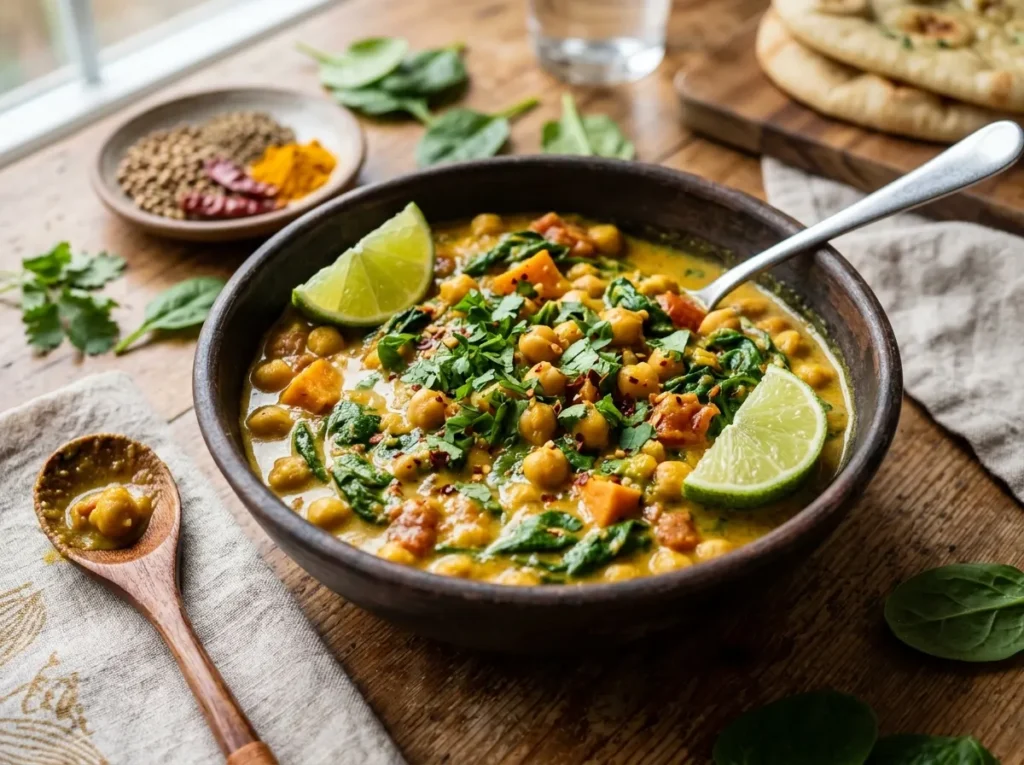
Finding a meal that is both exceptionally nutritious and incredibly satisfying can sometimes feel like an impossible puzzle. When exhaustion hits after a long day, the temptation to order takeout usually wins against the desire to cook a complicated meal. That is exactly where this easy vegan curry recipe steps in to save your evening. A vibrant, warming bowl of chickpea spinach curry offers the ultimate comfort food experience without requiring hours of labor in the kitchen.
Plant-based curries have surged in popularity for a very good reason. They are naturally rich in flavor, utilizing a fragrant blend of spices that transform simple vegetables and legumes into a masterpiece. Our chickpea and spinach version is particularly special because it relies heavily on accessible pantry staples and fresh, simple greens. You do not need to be a professionally trained chef to master this dish. The preparation is straightforward, making it highly approachable for beginners while remaining flavorful enough to impress seasoned cooks.
By following this comprehensive guide, you will learn exactly how to build a robust flavor profile from scratch. We will walk through the nutritional benefits of the core ingredients, outline the step-by-step cooking process, and share expert tips for customizing the dish to suit your personal palate. Prepare to discover your new go-to healthy vegan dinner.
The Wholesome Power of Chickpeas & Spinach
When you combine legumes and dark leafy greens, you create a nutritional powerhouse. Let’s look closely at why the primary ingredients in this dish make it such a healthy vegan dinner option for any day of the week.
Benefits of Chickpeas
Chickpeas, also known as garbanzo beans, are a foundational ingredient in many plant-based diets. They boast an impressive amount of plant-based protein, which is essential for muscle repair and overall bodily function. Additionally, they are loaded with dietary fiber. This high fiber content aids in digestion and helps maintain a steady blood sugar level, keeping you feeling full and energized for hours after your meal. They also provide vital minerals like iron, folate, and manganese.
Benefits of Spinach
Spinach is famously celebrated as a superfood. This leafy green is remarkably low in calories but exceptionally high in essential nutrients. A single serving provides massive amounts of Vitamin K, which is crucial for bone health, alongside Vitamin A and Vitamin C to support a strong immune system. Spinach also delivers a healthy dose of iron and calcium.
A Match Made in Culinary Heaven
Combining chickpeas and spinach in one dish offers more than just health benefits. The hearty, slightly nutty texture of the chickpeas provides a wonderful contrast to the tender, melt-in-your-mouth quality of wilted spinach. When simmered together in a spiced coconut broth, they absorb the rich, complex flavors beautifully, resulting in a cohesive and satisfying meal.
Essential Ingredients for Your Easy Vegan Curry
Creating a spectacular chickpea spinach curry requires a balance of fresh produce, reliable pantry staples, and a robust spice rack. Here is everything you need to gather before you start cooking.
Fresh Produce
The foundation of a great curry starts with fresh aromatics. You will need:
- A large yellow or white onion, finely diced to provide a sweet, savory base.
- Three to four cloves of fresh garlic, minced.
- A thumb-sized piece of fresh ginger, grated, to offer a warm, zesty bite.
- Two medium ripe tomatoes, diced, for a touch of natural acidity.
- Two to three large handfuls of fresh spinach leaves, washed and dried.
Key Pantry Staples
Pantry ingredients do the heavy lifting in this easy vegan curry recipe. Ensure you have:
- One 15-ounce can of chickpeas, thoroughly rinsed and drained.
- One 14-ounce can of full-fat coconut milk to create a luxuriously creamy sauce.
- One cup of low-sodium vegetable broth to help thin the sauce and simmer the ingredients.
The Spice Rack Essentials
Spices bring the dish to life. You will want to prepare a blend of:
- Two tablespoons of high-quality yellow curry powder.
- One teaspoon of ground turmeric for an earthy flavor and vibrant color.
- One teaspoon of ground cumin.
- Half a teaspoon of ground coriander.
- A quarter teaspoon of chili powder or cayenne pepper, adjusted to your heat preference.
Optional Additions
To enhance the flavor profile even further, consider keeping a fresh lime on hand for a bright squeeze of citrus at the end. A small dash of maple syrup can also balance the acidity of the tomatoes, while a sprinkle of garam masala stirred in just before serving adds an intoxicating aroma.
Step-by-Step: Crafting Your Easy Chickpea & Spinach Vegan Curry
Cooking this dish is a relaxing, methodical process. Follow these straightforward steps to achieve a perfectly balanced curry.
Preparation
Start by chopping your onion, mincing the garlic, and grating the ginger. Measure out your spices into a small bowl so they are ready to go when you need them. Having all your ingredients prepped—a practice known as mise en place—ensures a smooth, stress-free cooking experience and prevents anything from burning while you scramble to open a can.
Sautéing the Aromatics
Place a large skillet or Dutch oven over medium heat and add a tablespoon of coconut oil or olive oil. Once shimmering, add the diced onions. Sauté them for about five to seven minutes until they become translucent and begin to brown slightly around the edges. Add the minced garlic and grated ginger, stirring constantly for one more minute until they release their fragrance.
Incorporating Spices
Lower the heat slightly to prevent burning. Pour your pre-measured spice blend—curry powder, turmeric, cumin, coriander, and chili powder—directly onto the onions, garlic, and ginger. Stir continuously for about thirty seconds. This technique, known as blooming the spices, toasts them in the oil and unlocks their maximum aroma and flavor potential.
Adding Chickpeas and Liquids
Toss the diced tomatoes into the pan, stirring to deglaze any spices stuck to the bottom. Let the tomatoes cook down for about three minutes until they soften. Next, add the drained chickpeas, the can of coconut milk, and the vegetable broth. Stir everything together until the coconut milk melts into a smooth, golden broth. Bring the mixture to a gentle boil, then reduce the heat to low, cover the pan, and let it simmer for fifteen minutes.
Stirring in Spinach
After the curry has simmered and the flavors have melded, remove the lid. Add the fresh spinach by the handful. It will look like a massive amount of greens, but it will wilt down significantly within a minute or two. Stir gently until the spinach is fully incorporated and bright green.
Adjusting Consistency and Seasoning
Taste the broth. Add salt and black pepper as needed. If the curry seems too thick, splash in a little more vegetable broth or water. If it feels too thin, let it simmer uncovered for a few more minutes to reduce and thicken.
Tips and Tricks for the Perfect Vegan Curry
Even a simple recipe benefits from a few expert techniques. Here is how to ensure your curry turns out beautifully every single time.
Achieving the Right Consistency
The ideal curry sauce should easily coat the back of a spoon. If you find your sauce is persistently too thin, take a spoonful of the chickpeas, mash them on a cutting board with a fork, and stir the paste back into the pot. The natural starches will thicken the liquid beautifully.
Customizing the Spice Level
Heat tolerance is highly personal. If you prefer a mild curry, omit the chili powder completely and stick to a mild curry powder blend. For those who love a fiery kick, add half a minced jalapeño or serrano pepper during the aromatic sautéing phase, or sprinkle red pepper flakes over your finished bowl.
Boosting Flavor
A splash of acid at the very end of cooking can elevate a heavy coconut sauce. Squeeze the juice of half a lime into the pot just before taking it off the heat. If the canned tomatoes were particularly acidic, a teaspoon of maple syrup or coconut sugar will restore the balance perfectly.
Storage and Meal Prepping
Curries are famous for tasting even better the next day as the spices continue to mingle. Store leftovers in an airtight container in the refrigerator for up to four days. Reheat gently on the stovetop over low heat, adding a splash of water if the sauce has thickened too much in the fridge.
Serving Suggestions and Pairings
A great chickpea spinach curry deserves the right accompaniments to soak up every drop of the delicious sauce.
Classic Accompaniments
Serving this dish over a bed of fluffy grains is the most traditional approach. Basmati rice is an excellent choice, as its long grains stay separate and absorb the broth beautifully. Brown rice or quinoa offer nuttier flavors and an extra boost of whole-grain nutrition for an even healthier vegan dinner.
Bread Options
Scooping up rich curry with warm, soft bread is incredibly satisfying. Pair your meal with a piece of warm vegan naan, traditional Indian roti, or even a toasted whole-wheat pita if that is what you have in your pantry.
Garnish Ideas
Texture and visual appeal matter. Garnish your bowls with a generous sprinkle of roughly chopped fresh cilantro. A dollop of unsweetened plain vegan yogurt adds a cooling creaminess, while a handful of toasted cashews or sliced almonds provides a necessary crunch to contrast the soft chickpeas.
Why This Curry is Your Go-To Healthy Vegan Dinner
When you consider the entire package, it is easy to see why this dish deserves a permanent spot in your weekly rotation.
Nutritional Profile Recap
You are getting an impressive serving of plant-based protein, dietary fiber, iron, calcium, and essential vitamins, all in a single bowl. Because it utilizes healthy fats from coconut milk and limits refined ingredients, it fuels your body efficiently and deliciously.
Versatility for Any Occasion
Whether you need a rapid weeknight dinner to feed a hungry family or a comforting dish to serve guests at an informal dinner party, this easy vegan curry recipe delivers. It looks vibrant and beautiful in a serving dish, yet it takes less than forty minutes from chopping board to dining table.
Variations to Explore (Beyond the Basic Recipe)
Once you master the base recipe, the possibilities for customization are nearly endless.
Adding Other Vegetables
Feel free to clean out your produce drawer. Diced sweet potatoes or butternut squash add a wonderful sweetness and heartiness, though they will require an extra ten minutes of simmering time. Sliced bell peppers, zucchini, or cauliflower florets are also fantastic additions that bulk up the meal.
Incorporating Different Protein Sources
If you want to mix up the textures, swap out half of the chickpeas for cubed extra-firm tofu or tempeh. Red lentils are another incredible addition; just add half a cup of dry red lentils along with an extra cup of broth, and they will melt into the sauce, making it incredibly thick and hearty.
Experimenting with Curry Pastes
While this recipe utilizes dry curry powder, you can easily substitute it with two to three tablespoons of a store-bought vegan red or yellow curry paste. Thai-style pastes will give the dish a completely different, lemongrass-forward flavor profile that is equally delicious.
One-Pot Cleanup
To minimize dirty dishes, you can cook your grains right alongside the curry. Simply add half a cup of thoroughly rinsed quinoa directly into the simmering broth. Just ensure you add an extra cup of liquid to accommodate the grains as they cook.
Frequently Asked Questions (FAQ) About Vegan Curries
Can I use frozen spinach instead of fresh?
Absolutely. Frozen spinach works perfectly. Make sure to thaw it completely and squeeze out as much excess water as possible before stirring it into the pot, so it doesn’t dilute your creamy coconut sauce.
What can I substitute for coconut milk?
If you have a coconut allergy or prefer a lighter option, you can use plain, unsweetened almond milk or oat milk. Just be aware that the resulting sauce will be significantly thinner and less rich. Blended cashew cream is an excellent, thick alternative.
How long should I cook the curry to develop the best flavor?
While the minimum simmering time is fifteen minutes to ensure the ingredients heat through, letting it simmer on very low heat for up to forty-five minutes will deepen the flavor profile immensely.
Embrace the Deliciousness of Vegan Cooking
Cooking plant-based meals should never feel like a sacrifice of flavor or enjoyment. This easy chickpea & spinach vegan curry recipe proves that you can achieve deep, complex, and comforting flavors using simple ingredients found in almost any grocery store. It provides a reliable method for getting nutritious vegetables and legumes onto your plate without spending your entire evening standing over a stove.
Try making this wonderful healthy vegan dinner tonight, and discover how rewarding and effortless plant-based cooking can be. Once you do, be sure to share your vibrant culinary creations with friends and family, and welcome them into the joyous, flavorful world of vegan cuisine.
For More info please visit veganov-trichy.com .