Plant-based diets have taken the fitness world by storm. Elite athletes, bodybuilders, and everyday gym-goers are increasingly swapping chicken breasts and whey shakes for lentils, tofu, and peas. But despite this shift, a persistent myth remains: many people still believe you cannot build serious muscle without eating meat.
The truth is that building a strong, muscular physique comes down to training stimulus, adequate calories, and sufficient protein—regardless of where that protein originates. You do not need animal products to trigger muscle protein synthesis. With a well-planned vegetarian protein diet, you can easily meet your macronutrient needs while enjoying the added benefits of fiber, antioxidants, and micronutrients.
Finding the right vegan protein sources does not require expensive supplements or exotic ingredients. Your local grocery store is packed with affordable, accessible plant based protein foods that can support your fitness goals. This guide explores the most effective high protein vegan foods for muscle gain, breaking down their nutritional benefits and offering practical ways to include them in your daily meal plan.
The Science Behind Plant-Based Muscle Building
To understand how high protein vegan foods help you bulk up, you need to understand the mechanics of muscle growth.
How Protein Supports Muscle Synthesis
When you lift heavy weights, you create micro-tears in your muscle fibers. Your body repairs these tears through a process called muscle protein synthesis, fusing muscle fibers together to form new protein strands. This process requires a steady supply of dietary protein. If you do not consume enough protein, your body cannot effectively repair and grow this tissue.
Understanding Complete vs. Incomplete Proteins
Proteins are made up of building blocks called amino acids. There are 20 different amino acids, nine of which are considered “essential” because your body cannot produce them on its own. A “complete” protein contains all nine essential amino acids in adequate amounts. While animal proteins are naturally complete, some plant proteins are incomplete, meaning they are low in one or more essential amino acids.
The Importance of Amino Acid Profiles
For years, fitness enthusiasts believed you had to combine specific vegan protein sources (like rice and beans) in the exact same meal to form a complete protein. Modern nutrition science shows this is unnecessary. As long as you eat a varied diet featuring different plant based protein foods throughout the day, your liver will store and combine the necessary amino acids to support muscle growth and recovery.
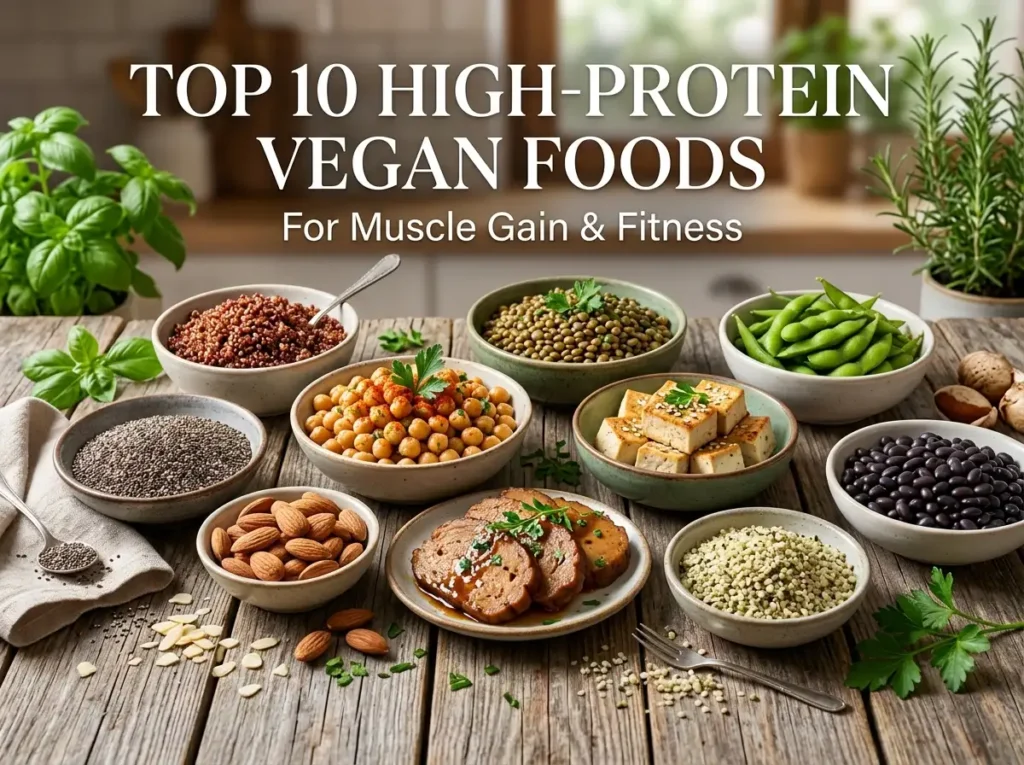
Top 10 High-Protein Vegan Foods for Muscle Gain
Stocking your pantry with the right ingredients is the first step toward reaching your muscle-building goals. Here are ten of the best high protein vegan foods to power your workouts.
Lentils and Legumes
Lentils, chickpeas, and black beans are the cornerstone of any effective vegetarian protein diet. One cup of cooked lentils delivers about 18 grams of protein and a massive 15 grams of fiber.
- Nutritional highlights: Packed with iron, folate, and slow-digesting complex carbohydrates, legumes provide sustained energy for intense workouts.
- Serving suggestions: Toss chickpeas into a salad, blend them into hummus, or simmer red lentils into a hearty post-workout stew.
Tofu and Tempeh
Derived from soybeans, tofu and tempeh are some of the few plant-based foods that offer a complete amino acid profile. A 100-gram serving of firm tofu contains around 15 grams of protein, while tempeh boasts about 19 grams.
- Nutritional highlights: Tempeh is fermented, which aids in digestion and promotes a healthy gut microbiome. Tofu is highly versatile and low in calories.
- Serving suggestions: Crumble firm tofu in a pan with turmeric for a vegan scramble. Marinate and bake tempeh strips for a smoky, meat-like addition to sandwiches and bowls.
Edamame
Young soybeans, known as edamame, are a staple in plant-based fitness circles. A single cup of cooked edamame yields approximately 17 grams of complete protein.
- Nutritional highlights: Edamame is rich in isoflavones, antioxidants, and vitamin K. It is also an excellent source of healthy plant-based fats.
- Serving suggestions: Boil and lightly salt them for a quick, snackable protein boost, or shell them to toss directly into stir-fries and salads.
Quinoa
While most grains offer minimal protein, quinoa stands out as a complete vegan protein source. One cup of cooked quinoa provides about 8 grams of protein.
- Nutritional highlights: Quinoa is gluten-free, high in magnesium, and packed with fiber. Magnesium is specifically crucial for muscle contraction and relaxation.
- Serving suggestions: Use quinoa as a base for grain bowls, mix it with black beans and corn, or eat it as a warm breakfast cereal topped with nuts and berries.
Seitan
Often referred to as “wheat meat,” seitan is made from hydrated gluten. It is one of the most protein-dense plant foods available, offering a staggering 25 grams of protein per 100-gram serving.
- Nutritional highlights: Seitan is extremely low in fat and carbohydrates. However, because it is made of pure gluten, it is not suitable for those with celiac disease or gluten sensitivity.
- Serving suggestions: Sauté it with vegetables, grill it on skewers, or shred it to mimic chicken or pulled pork in your favorite recipes.
Nutritional Yeast
Affectionately known as “nooch,” nutritional yeast is a deactivated yeast that brings a cheesy, savory flavor to dishes. Just two tablespoons provide 8 grams of complete protein.
- Nutritional highlights: It is frequently fortified with B vitamins, including B12, which is vital for nerve function and red blood cell production in vegans.
- Serving suggestions: Sprinkle it over popcorn, stir it into pasta sauces for a creamy texture, or blend it with soaked cashews to make a dairy-free cheese sauce.
Hemp Seeds
Hemp seeds are nutritional powerhouses. A three-tablespoon serving provides nearly 10 grams of complete protein.
- Nutritional highlights: They boast an optimal ratio of omega-3 to omega-6 fatty acids, which helps combat exercise-induced inflammation and supports joint health.
- Serving suggestions: Blend them into your morning protein shake, sprinkle them over oatmeal, or mix them into baked goods for a nutty crunch.
Chia Seeds
Though tiny, chia seeds punch well above their weight. Two tablespoons offer about 4 grams of protein, alongside 11 grams of fiber.
- Nutritional highlights: Chia seeds absorb up to ten times their weight in water, helping you stay hydrated during long workouts. They are also packed with calcium and antioxidants.
- Serving suggestions: Mix them with almond milk and let them sit overnight for a thick chia pudding, or use them as an egg substitute in vegan baking.
Spirulina
This blue-green algae is considered a superfood for a reason. Just two tablespoons of dried spirulina yield 8 grams of protein.
- Nutritional highlights: It is incredibly nutrient-dense, offering high amounts of iron, copper, and B vitamins. It also has powerful antioxidant properties that aid in cellular detoxification.
- Serving suggestions: Due to its strong, earthy flavor, spirulina is best disguised in fruit-heavy smoothies or mixed into energy bites with dates and nuts.
Peanuts and Peanut Butter
Affordable and universally loved, peanuts are technically legumes and offer a fantastic protein return. Two tablespoons of peanut butter contain about 7 grams of protein.
- Nutritional highlights: They are rich in heart-healthy monounsaturated fats, providing the calorie density needed by those trying to maintain a caloric surplus for muscle growth.
- Serving suggestions: Spread peanut butter on whole-grain toast, mix it into oatmeal, or use powdered peanut butter in shakes to keep fat content lower while maximizing protein.
Crafting Your Vegan Muscle-Building Meal Plan
Knowing the best high protein vegan foods is only half the battle. You must organize them into a cohesive dietary strategy to see real results in the gym.
Combining Protein Sources
To optimize your amino acid intake, aim to eat a variety of plant based protein foods each day. If you have oats and hemp seeds for breakfast, try a quinoa and black bean bowl for lunch, followed by a tofu stir-fry for dinner. This ensures your body has all the building blocks necessary to synthesize new muscle tissue.
Caloric Surplus and Consistent Intake
Muscle growth requires energy. If you are burning more calories than you consume, your body will prioritize vital functions over building new biceps. Calculate your daily total energy expenditure and add 300 to 500 calories. Ensure that roughly 1.6 to 2.2 grams of protein per kilogram of body weight is factored into those daily calories.
Sample Daily Meal Plan
Here is a quick look at a high-protein vegan day:
- Breakfast: Tofu scramble with spinach, nutritional yeast, and a side of sprouted grain toast.
- Snack: A smoothie made with soy milk, a banana, two tablespoons of peanut butter, and chia seeds.
- Lunch: A hearty bowl of quinoa, black beans, corn, avocado, and pumpkin seeds.
- Snack: Roasted edamame and a handful of almonds.
- Dinner: Grilled seitan slices alongside steamed broccoli and a hearty serving of lentil stew.
Beyond Food: Supporting Your Vegan Fitness Journey
Nutrition is critical, but it works synergistically with other lifestyle factors. To maximize your gains, pay attention to recovery and supplementation.
Hydration and Electrolytes
Muscle tissue is roughly 75% water. Dehydration limits performance, reduces strength, and hampers recovery. Drink water consistently throughout the day, and consider adding a pinch of salt or an electrolyte powder to your water around intense training sessions to replenish sodium lost through sweat.
Rest and Recovery
You do not build muscle in the gym; you build it in bed. Aim for seven to nine hours of quality sleep per night. Sleep is when your body releases human growth hormone and actively repairs the micro-tears created during your workouts.
The Role of Supplements
While you can easily get enough protein from whole foods, supplements offer convenience. A vegan protein powder (like a pea and rice blend) is an easy post-workout option. Additionally, vegans should strongly consider a B12 supplement, as it is largely absent from plant foods (unless fortified). Creatine monohydrate is also highly recommended; it is the most researched sports supplement on the market and provides a noticeable boost to strength and power output for plant-based athletes.
Fueling Your Plant-Based Fitness Journey
Building muscle on a plant-based diet is entirely achievable. By prioritizing these top high protein vegan foods, you can ensure your body gets the nutrients it needs to recover, adapt, and grow. From the affordability of lentils and peanuts to the complete amino acid profiles of tofu and quinoa, vegan protein sources are diverse, delicious, and highly effective.
Embrace the variety of a vegetarian protein diet, train with intensity, and prioritize your recovery. We would love to hear how you fuel your workouts. Drop your favorite plant-based muscle-building recipes in the comments below, and share this guide with anyone looking to optimize their fitness journey through plant-based nutrition!
For more info please visit veganovtrichy.com .