Plant-based eating has experienced a massive surge in popularity over the past few years. As more people explore vegan and dairy-free lifestyles, the demand for plant-based versions of classic comfort foods has skyrocketed. People want meals that are better for the planet and their bodies, but they absolutely refuse to compromise on taste.
A common misconception is that a truly comforting pasta dish requires heavy cream, butter, or mountains of cheese. Many home cooks assume that taking dairy out of the equation leaves you with thin, watery sauces or dry noodles. The truth is quite the opposite. By using the right plant-based ingredients and a few clever techniques, you can create a velvety, rich sauce that rivals any traditional Italian restaurant offering.
This guide will teach you everything you need to know about crafting the ultimate creamy vegan dinner. We will explore the science of dairy-free creaminess, break down alternative sauce bases, and walk you through a foolproof vegan pasta recipe that delivers incredible taste, satisfying texture, and fantastic health benefits.
Understanding Your Ingredients: The Heart of Creamy Vegan Pasta
Creating a spectacular dairy free pasta sauce starts with selecting the right building blocks. You do not need highly processed substitutes to achieve a decadent texture; nature provides plenty of incredible whole foods that do the job perfectly.
The Pasta Foundation
The pasta you choose acts as the canvas for your creamy masterpiece. Most dried pastas found in the grocery store—like penne, spaghetti, and fusilli—are naturally vegan, made simply from semolina flour and water. Always check the label to ensure no eggs are included, particularly with fresh pasta or egg noodles.
If you are catering to a gluten-free diet, you have excellent options available. Brown rice pasta offers a great chew, while lentil and chickpea pastas provide a massive boost of plant-based protein. The secret to perfect pasta, regardless of the type, is cooking it al dente (firm to the bite). Because your pasta will continue to cook slightly when tossed with the hot sauce, stopping the boiling process a minute early prevents it from becoming mushy. Remember to save a cup of your starchy pasta water before draining; this liquid gold helps emulsify your vegan sauce, making it cling beautifully to every noodle.
Dairy-Free Creaminess Unleashed
When you remove dairy from the kitchen, cashews often step up as the reigning champion of creaminess. Raw cashews have a mild, buttery flavor and a high fat content. When soaked in hot water and blended, they break down into a miraculously smooth, thick cream that mimics heavy whipping cream flawlessly.
If you have a nut allergy or prefer a lighter option, other plant-based creams work wonderfully. Oat milk offers a neutral, slightly sweet base that thickens well when simmered. Soy milk provides a rich, protein-dense alternative that holds up beautifully to heat without separating. Almond milk can work in a pinch, though it tends to be thinner and requires a thickening agent like cornstarch or arrowroot powder.
No conversation about vegan sauces is complete without mentioning nutritional yeast. Affectionately known as “nooch,” these golden flakes are the ultimate cheesy secret weapon. Nutritional yeast provides a savory, umami-rich parmesan flavor while delivering a healthy dose of B vitamins.
Aromatics and Flavor Boosters
A creamy texture needs a robust flavor foundation to prevent the dish from tasting flat. Garlic and onions are essential. Sautéing finely diced onions until translucent and adding minced garlic releases natural sugars and deep, savory notes.
Herbs and spices take the dish to the next level. Fresh basil, parsley, and thyme add a bright, herbaceous finish, while dried oregano or a pinch of nutmeg mixed into a cream sauce adds warmth and complexity. Vegetables are your best friends here. Sautéed mushrooms offer a meaty, earthy bite, while roasted red peppers can be blended directly into your sauce for natural sweetness and a vibrant pop of color.
The Creamy Vegan Pasta Sauce: A Step-by-Step Guide
Mastering a few basic sauce techniques allows you to invent countless variations for dinner. Here is how to build out your sauce repertoire.
Basic Cashew Cream Sauce
The basic cashew cream sauce is versatile, rich, and surprisingly simple. Start by soaking one cup of raw cashews in boiling water for at least 30 minutes. Drain and rinse the cashews, then add them to a high-speed blender. Pour in three-quarters of a cup of unsweetened plant milk or vegetable broth, two tablespoons of nutritional yeast, a tablespoon of fresh lemon juice for brightness, and a generous pinch of salt. Blend on the highest setting until the mixture is completely smooth and free of any grit.
You can easily customize this base. Blend in roasted garlic cloves for a mellow, sweet garlic cream, or add a handful of rehydrated sun-dried tomatoes for a tangy, robust red sauce.
Beyond Cashews: Alternative Creamy Sauces
If you want to skip the nuts, try a White Bean Alfredo. Blend a can of drained and rinsed cannellini beans with vegetable broth, garlic, and nutritional yeast. The beans yield a thick, creamy texture while significantly boosting the fiber and protein content of your meal.
For a fresh, vibrant twist, an Avocado Pesto Cream is incredibly fast. Blend a ripe avocado with fresh basil, pine nuts, garlic, and a splash of lemon juice. The healthy fats in the avocado create a silky sauce that requires zero cooking—just toss it directly with your hot pasta.
Silken tofu is another fantastic base. Because of its high water content and smooth texture, blending silken tofu with savory spices, garlic powder, and a dash of white miso paste creates a light, velvety sauce that is substantially lower in fat than cashew cream but equally satisfying.
Troubleshooting Common Sauce Issues
Even experienced cooks sometimes run into minor sauce issues. If your sauce is too thick, simply whisk in a splash of warm vegetable broth or reserved pasta water until you reach the desired consistency. If it is too thin, simmer it gently on the stove for a few minutes to let the liquid reduce, or whisk in a slurry made from one teaspoon of cornstarch and cold water.
If your cashew sauce turns out grainy, your blender might need a little more time, or the cashews needed a longer soak. To fix a bland sauce, remember the holy trinity of flavor enhancement: salt, acid, and umami. A pinch of sea salt, a squeeze of lemon juice, or a dash of soy sauce will instantly wake up the flavors.
Crafting Your Perfect Creamy Vegan Pasta Dish: Recipe Spotlight
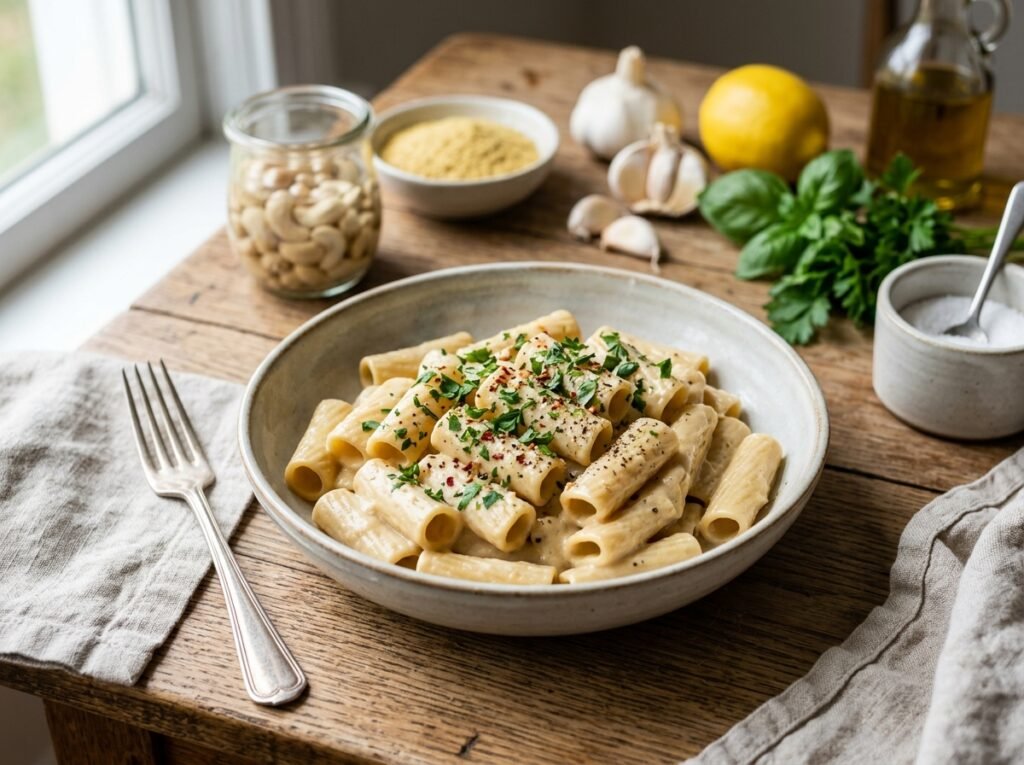
It is time to put these techniques into practice. This Creamy Garlic Mushroom Pasta is the ultimate crowd-pleaser and serves as a fantastic introduction to dairy-free cooking.
Signature Recipe: Creamy Garlic Mushroom Pasta (Vegan & Dairy-Free)
Ingredients:
- 12 oz vegan pasta (fettuccine or penne work beautifully)
- 1 cup raw cashews (soaked in hot water for 30 minutes, then drained)
- 1 cup unsweetened soy or oat milk
- 3 tbsp nutritional yeast
- 1 tbsp fresh lemon juice
- 1 tbsp olive oil or vegan butter
- 1 medium yellow onion, finely diced
- 4 cloves garlic, minced
- 16 oz cremini or button mushrooms, sliced
- 1 tsp dried thyme
- Salt and black pepper to taste
- Fresh parsley, chopped (for garnish)
Instructions:
- Bring a large pot of salted water to a boil. Add the pasta and cook according to the package instructions until al dente. Reserve 1 cup of the starchy pasta water, then drain the pasta and set it aside.
- While the pasta boils, prepare the creamy base. In a high-speed blender, combine the soaked cashews, plant milk, nutritional yeast, and lemon juice. Blend until completely smooth and velvety. Set aside.
- Heat the olive oil in a large skillet over medium-high heat. Add the diced onion and sauté for 4-5 minutes until soft and translucent.
- Add the sliced mushrooms to the skillet. Let them cook undisturbed for a couple of minutes so they develop a golden-brown sear, then stir and cook until all their moisture has evaporated. Add the minced garlic and dried thyme, cooking for one more minute until fragrant.
- Reduce the heat to medium-low. Pour the blended cashew cream into the skillet with the mushrooms. Stir well to combine.
- Add the cooked pasta to the skillet. Toss everything together gently. If the sauce is too thick, slowly pour in the reserved pasta water, a few tablespoons at a time, until the sauce reaches a silky consistency that coats the noodles perfectly.
- Season generously with salt and black pepper. Serve immediately, garnished with fresh parsley.
Variations and Customizations
This vegan pasta recipe is incredibly adaptable. To increase the protein, stir in a can of drained chickpeas, a cup of cooked green lentils, or sliced vegan sausage during the last few minutes of cooking.
You can also adapt the recipe based on the season. In the spring, toss in fresh asparagus spears and peas. During the winter, fold in handfuls of fresh spinach or kale right before serving so the greens slightly wilt into the warm sauce. If you prefer a spicy kick, add half a teaspoon of red chili flakes or a dash of cayenne pepper when sautéing the onions.
Serving Suggestions
To turn this creamy vegan dinner into a complete feast, serve it alongside a crisp, acidic side salad dressed with a simple lemon vinaigrette to cut through the richness of the pasta. Thick slices of toasted sourdough bread rubbed with raw garlic make the perfect vehicle for scooping up any leftover sauce. If you enjoy wine, a light, crisp Pinot Grigio or a dry Sauvignon Blanc pairs beautifully with the earthy mushrooms and creamy cashew sauce.
The Health Benefits of Going Dairy-Free (and Deliciously So!)
Choosing a dairy free pasta sauce over a traditional heavy cream version offers a wealth of benefits that extend far beyond the dinner table.
Digestive Health
A significant portion of the global population experiences some level of lactose intolerance. Consuming heavy dairy can lead to bloating, discomfort, and sluggishness. Removing dairy from your pasta dishes eliminates these digestive hurdles, allowing you to enjoy a heavy, comforting meal without the uncomfortable aftermath. Furthermore, relying on plant-based ingredients like beans, cashews, and vegetables drastically increases your dietary fiber intake, which promotes a healthy gut microbiome and smoother digestion.
Nutritional Advantages
When you swap heavy whipping cream for a cashew or white bean base, you are upgrading the nutritional profile of your meal. Traditional dairy cream is high in saturated fat and cholesterol. Plant-based creams are cholesterol-free and contain heart-healthy unsaturated fats. Ingredients like cashews provide essential minerals such as magnesium, zinc, and iron, while nutritional yeast delivers a powerful dose of B-vitamins, including B12, which is vital for nerve health and energy levels.
Environmental Impact
Eating a plant-based meal is one of the most effective ways to lower your personal carbon footprint. The dairy industry requires vast amounts of water, land, and feed, and it generates significant greenhouse gas emissions. By choosing plant milks and nuts over cow’s milk and cheese, you are utilizing ingredients that generally require fewer natural resources to produce.
Tips and Tricks for Mastering Vegan Pasta
Cooking plant-based meals should seamlessly integrate into your weekly routine. With a few smart strategies, you can make this creamy vegan dinner a recurring staple.
Meal Prep Strategies
Vegan sauces are exceptionally meal-prep friendly. You can blend the cashew cream sauce up to four days in advance and store it in an airtight jar in the refrigerator. When you are ready for dinner, simply boil the pasta, sauté your vegetables, and pour the pre-made sauce into the pan.
When storing leftovers, keep in mind that cashew and bean-based sauces tend to thicken significantly in the fridge as they cool. To reheat, place the pasta in a skillet over low heat and add a splash of water or plant milk, stirring gently until the sauce reconstitutes and becomes creamy again. Avoid using the microwave on a high setting, as it can cause the sauce to separate or become overly dry.
Budget-Friendly Hacks
While raw cashews and artisanal vegan cheeses can be expensive, a creamy vegan dinner can easily fit into a tight budget. Buying cashews in bulk or from the baking aisle (where cashew pieces are cheaper than whole cashews) saves money. Alternatively, using white beans, sunflower seeds, or silken tofu as the base for your sauces provides a highly economical way to achieve creaminess without breaking the bank. Produce like onions, garlic, and seasonal vegetables are consistently affordable and pack a massive flavor punch.
Time to Start Cooking
You do not need to rely on dairy to enjoy a rich, indulgent, and satisfying pasta dish. By understanding the versatility of plant-based ingredients like cashews, white beans, and nutritional yeast, you can create sauces that are vibrant, flavorful, and incredibly creamy.
Whether you are a lifelong vegan, someone exploring dairy-free options for health reasons, or just a food lover looking for a delicious new recipe to try, this approach to pasta is guaranteed to impress. Grab your blender, boil some water, and get ready to experience a whole new world of comforting, plant-based cooking.
For More info please visit veganovtrichy.com .